
FOOD AND HYDRATION
How much water should I drink while running?
Match running hydration to your needs and avoid overdrinking
There is no single hourly water target for every runner. Plan around duration, heat, access to fluids and your own response, and avoid drinking more than you lose. Forced overdrinking can be dangerous.
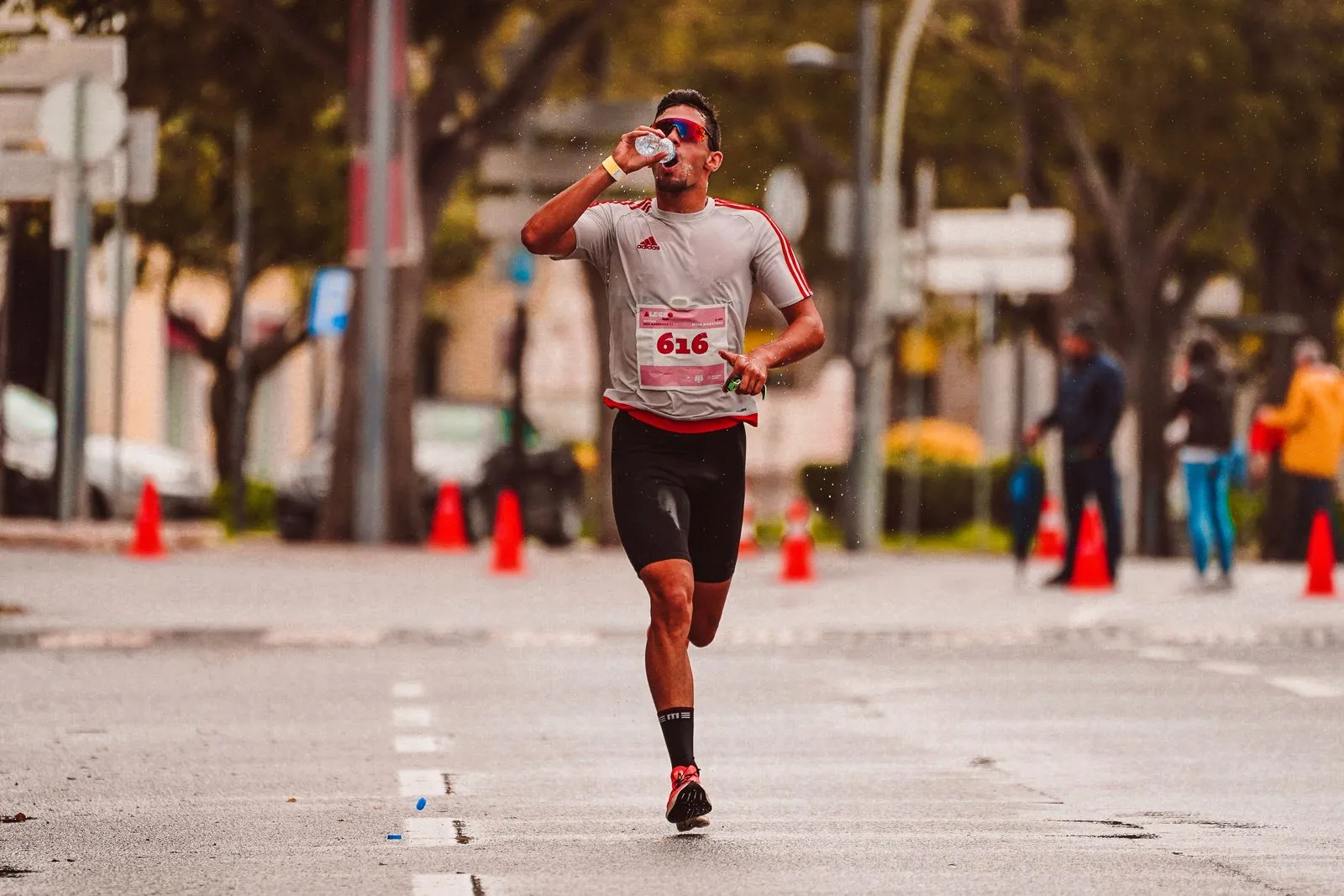
Start with the outing, not a bottle rule
A short easy run on a cool morning and a long humid race are different hydration problems. Think about how long you will be out, whether you can get water on the route and how the conditions compare with your usual runs.
A review of planned drinking and drinking to thirst explains why both approaches have a place. Thirst can be useful during shorter, cooler sessions; a practiced plan can be valuable when duration or conditions make the situation more demanding. Neither approach means forcing large volumes regardless of your needs.
Estimate sweat loss carefully
A before-and-after body-mass comparison can provide a rough planning estimate when measured consistently. Account for fluid consumed and urine passed. Wet clothing and inconsistent scales can distort the result.
| Item | Amount |
|---|---|
| Body mass before | 70.0 kg |
| Body mass after | 69.5 kg |
| Fluid consumed | 0.4 L |
| Urine during the session | 0 L |
| Approximate sweat loss | 0.5 + 0.4 = 0.9 L |
This example estimates loss under those conditions. It is not an instruction to drink exactly 0.9 L every hour, and the calculation becomes less precise in longer events where other mass changes matter. Repeat observations under relevant conditions instead of extrapolating from one run.
Plan access as well as quantity
Know where you can refill or buy water, or carry what you need for the route. A loop can make changing the plan easier on a hot day. Check race aid-station spacing before relying on water being available at a particular point.
Practise drinking in the way you intend to race. A bottle, soft flask and small paper cup behave differently while moving. Slowing or walking briefly to drink can be more practical than spilling most of the fluid while trying to preserve a split.
More is not automatically safer
Do not use finishing every bottle as a hydration goal. Drinking excessively relative to losses can cause serious problems, including exercise-associated hyponatremia. Sodium in a drink does not make unlimited drinking safe.
Headache, confusion, vomiting or collapse during a long or hot event needs prompt assessment; the symptoms do not let you reliably distinguish heat illness from other problems on your own. Stop and obtain help rather than assuming that another bottle is always the answer.
Read the run with the conditions attached
In Runome, use the duration, route and available effort data to compare similar outings. A higher heart rate in heat can have several explanations and is not a direct hydration measurement. Notes about conditions and fluid access help make the comparison meaningful.
Pair the plan with heat-aware pacing and, where relevant, your carbohydrate plan. Fluid and fuel interact practically, but grams of carbohydrate and litres of water are different quantities that should not be confused.