
RUNNING CONDITIONS
Is treadmill running as good as running outside?
Treadmill vs outdoor running: differences and the 1% rule
A treadmill gives you the same training as the road for most sessions. Knowing the few real differences helps you set the belt, compare runs fairly and prepare for outdoor races.
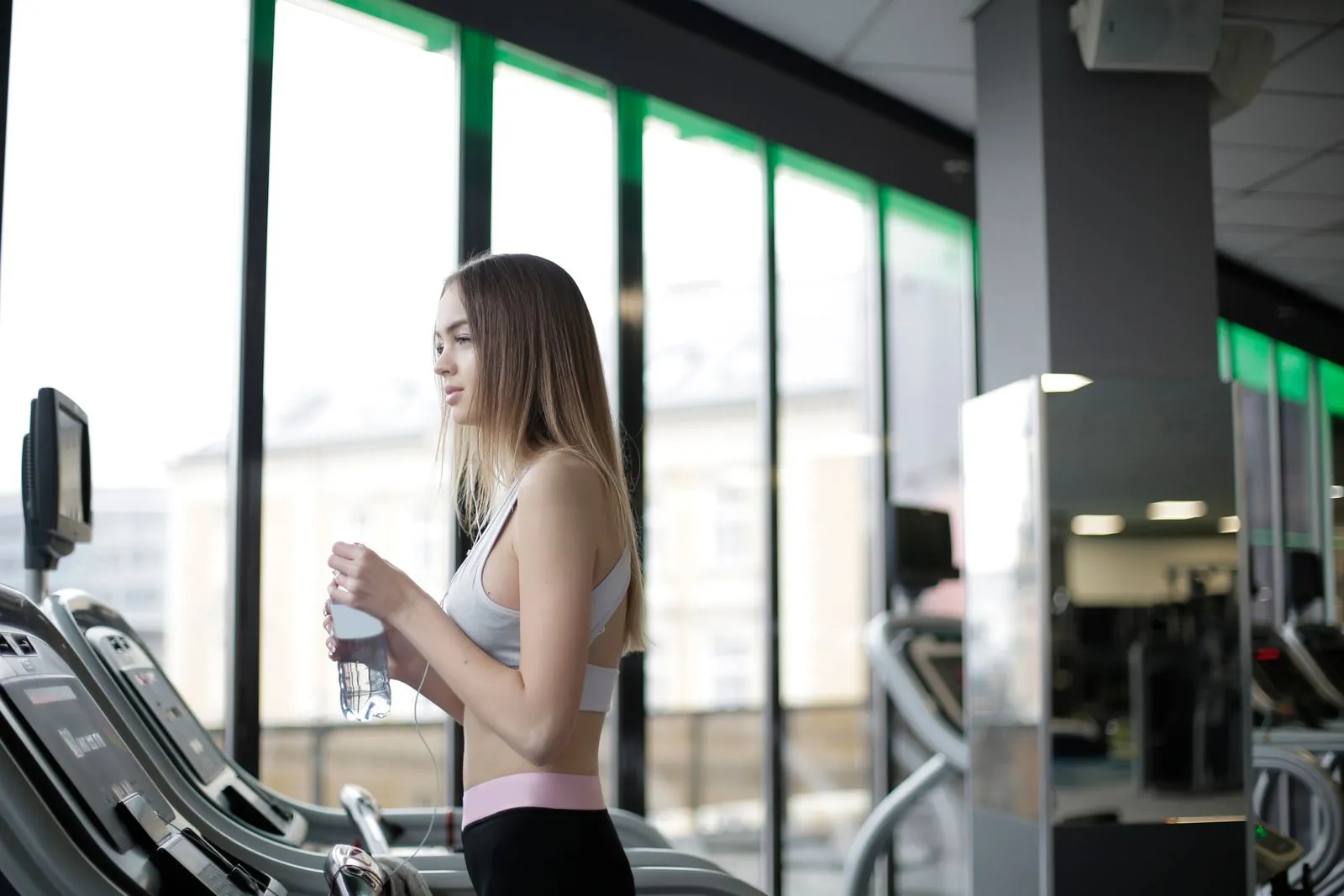
Is treadmill running easier than running outside?
Partly. On a treadmill there is no air to push through and the belt moves under you, so the same speed can cost slightly less energy. Indoors there is also no wind, no camber and no hills unless you set them.
A 2019 meta-analysis of 34 crossover studies found that oxygen use at submaximal speeds, maximum oxygen uptake and maximum heart rate were similar on a motorised treadmill and overground. How hard it felt depended on speed: with the belt flat, perceived effort and heart rate matched outdoor running at about 14 km/h, and at 1% incline at about 11 km/h. Below those speeds the treadmill tended to feel easier; above them, harder.
Performance is where the two differ most. In time trials runners were slower on the treadmill, by about 40 seconds over 5 km with the belt flat, and when asked to run at a set effort they chose slower speeds on the belt.
Does the 1% incline rule work?
The rule comes from Jones and Doust (1996), who measured nine trained male runners in six-minute runs at 10.5–18 km/h. Across that range, a 1% grade best matched the energy cost of running on a flat outdoor road.
At the two slowest speeds, 10.5 and 12 km/h, outdoor oxygen use did not differ from the treadmill at either 0% or 1%, because air resistance is small at those speeds. The rule was not tested at typical easy-jogging speeds below 10.5 km/h, which is slower than 5:43 min/km.
In practice: use 1% for steady, tempo and interval running faster than about 11 km/h, and 0–1% for easy running. Add more incline only when the session is meant to be a hill workout.
Treadmill speed to pace: conversion table
| Belt speed | Pace per km | Pace per mile |
|---|---|---|
| 8 km/h | 7:30 | 12:04 |
| 9 km/h | 6:40 | 10:44 |
| 10 km/h | 6:00 | 9:39 |
| 11 km/h | 5:27 | 8:47 |
| 12 km/h | 5:00 | 8:03 |
| 13 km/h | 4:37 | 7:26 |
| 14 km/h | 4:17 | 6:54 |
| 15 km/h | 4:00 | 6:26 |
| 16 km/h | 3:45 | 6:02 |
If your treadmill shows miles per hour, 6 mph is 10:00 per mile or 6:13 per km, and 7 mph is 8:34 per mile or 5:20 per km. For any other setting use the pace calculator or the pace and speed conversion guide.
Equal speed steps are not equal pace steps. Going from 8 to 9 km/h takes 50 seconds off every kilometre; going from 15 to 16 km/h takes off only 15 seconds.
- Pace
Pace at each belt speed. Adding 1 km/h saves 50 seconds per km at 8–9 km/h but only 15 seconds at 15–16 km/h. The 1% incline rule was tested only between 10.5 and 18 km/h.
Does your running form change on a treadmill?
Mostly not. A 2020 review of 33 studies concluded that step timing, joint angles, forces and muscle activity are largely comparable between treadmill and overground running.
The clearest difference was the angle of the foot as it lands, which differed by about 10 degrees. Contact time differed by a few milliseconds and peak push-off force very slightly. The evidence is of low certainty, but it means foot-strike observations from a treadmill gait analysis should be read with caution.
Give yourself a few sessions to get used to the belt. Lab studies usually familiarise runners first, and early treadmill runs often feel awkward simply because they are new.
When to choose the treadmill and when to go outside
- Treadmill: ice, darkness, extreme heat or poor air quality; precise intervals; controlled hill sessions; returning from injury with an easy way to stop; runs fitted around childcare or work.
- Outside: race preparation, especially for hilly or windy courses; practising pacing by feel; long runs where variety helps; downhill running, which a standard treadmill cannot replicate.
If you race outdoors, run at least some key sessions and most long runs outside in the final weeks before the race. Treadmill time-trial results tend to understate what you can do on the road, so they are a poor guide to race pace.
How to make treadmill runs count
- Set up safely. Clip the emergency stop cord to your clothing, start the belt at walking speed, and straddle the belt whenever you need to stop or adjust something.
- Choose the incline for the session. 0–1% for easy runs, 1% for steady and faster running above about 11 km/h.
- Cool the room. Use a fan and keep a drink within reach; with little airflow you heat up faster, and heart rate rises with it.
- Run by effort or heart rate. Use the same zones as outside rather than chasing outdoor paces.
- Label the run. Belt speed, a watch’s wrist-based estimate and GPS can disagree. In Runome, keep treadmill runs separate when you compare two runs, so a measurement change does not look like a fitness change.
Stop the belt and step off if you feel dizzy, faint or unusually breathless, or have chest pain or pressure. Chest pain during exercise needs urgent medical assessment: call 999 or 112 if it does not settle within a few minutes of rest.
Frequently asked questions
Is 5 km on a treadmill the same as 5 km outside?
For training, close enough: oxygen use and heart rate at steady speeds are similar, especially with a 1% incline. For performance, no. In the research, time trials averaged about 40 seconds slower over 5 km on a flat treadmill, and belt calibration varies between machines, so treat treadmill results as a separate benchmark from road times.
What incline should I use on a treadmill?
Use 1% for steady or fast running above about 11 km/h, where it best matches the energy cost of running outdoors. For easy running, 0–1% is fine because air resistance is small at slow speeds. Save 2% and above for deliberate hill training, and avoid holding the handrails, which takes work away from your legs.
Is treadmill running better for your knees?
There is no good evidence that it is. Running mechanics, including joint angles and forces, are largely the same on a treadmill and outside. A treadmill does offer an even surface and an easy way to stop, which can help while returning from injury. For knee health, how quickly you increase training matters far more; see is running bad for your knees.
Why is my heart rate higher on the treadmill?
Two common reasons. Indoors there is little airflow, so you heat up faster and heart rate drifts upwards; a fan helps. And at faster speeds, studies found heart rate and perceived effort ran slightly higher on the treadmill than outdoors. Check that your sensor is reading correctly too; see why heart rate rises at the same pace.