
TRAINING
How do I run faster?
Run faster by building consistency and making hard sessions count
Build a consistent base of manageable running, then add faster work that you can recover from. Trying to beat your usual pace on every outing makes it harder to sustain both easy days and quality sessions.
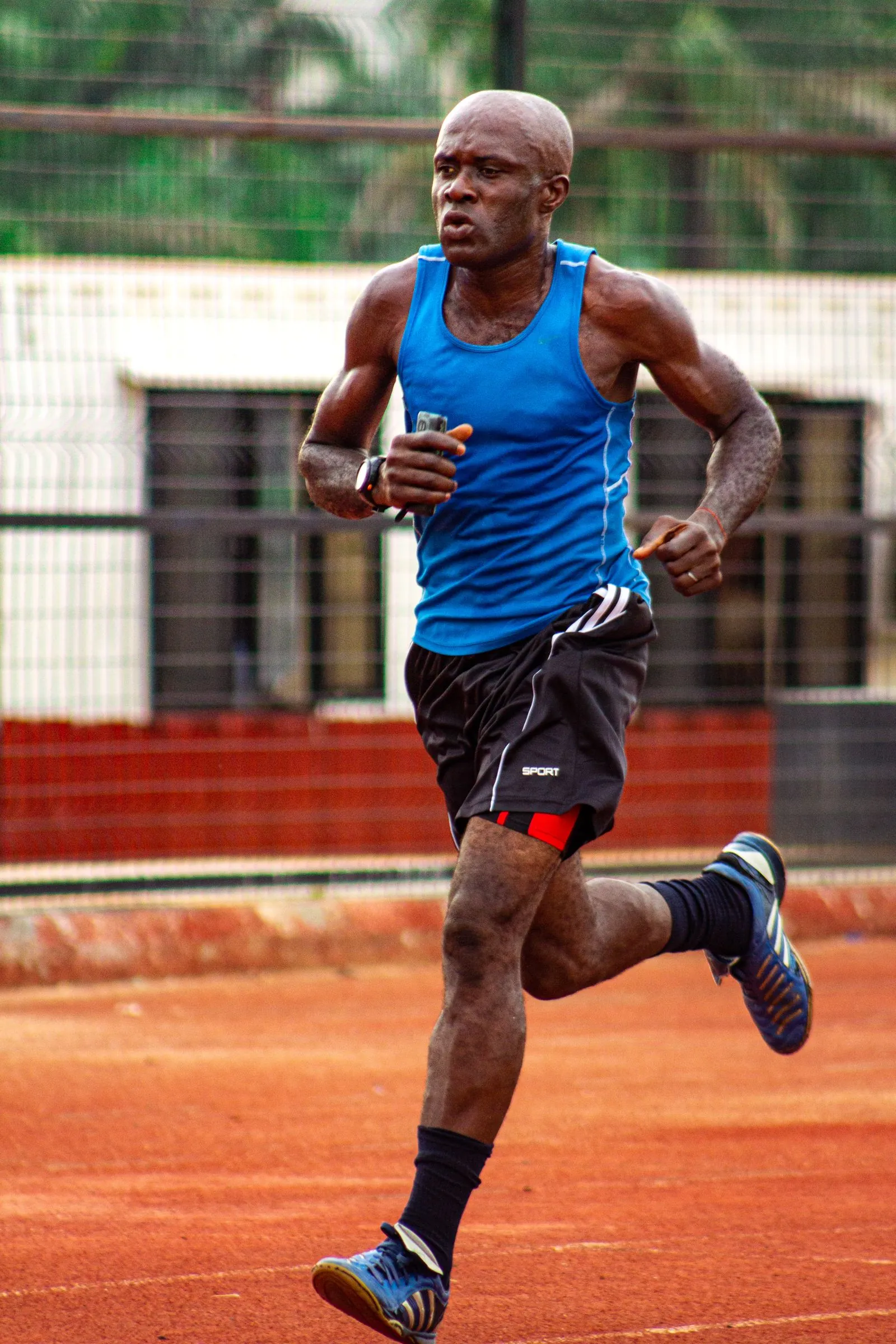
Choose the performance you want to improve
Running a faster kilometre, improving a 5K and holding your pace through a half marathon are different goals. Name the distance or situation first. Otherwise a quick short run can look like proof of improvement even when it tells you little about your actual target.
Choose a repeatable benchmark: a measured route, a race, or a familiar session under broadly similar conditions. Keep easy runs available for training rather than turning them all into benchmarks. Improvements are easier to judge when the question stays the same.
Look for the missing piece in your week
If you currently miss most planned sessions, consistency is the first opportunity. If you already run regularly but every outing is equally demanding, separating easy running from deliberate faster work may be more useful than adding another hard day.
A study of training-intensity distribution in recreational runners illustrates that the way work is distributed matters. It does not establish one perfect percentage for everyone. Your history, the race distance and how much training you can tolerate still shape the plan.
Make a faster session readable
For a runner already accustomed to faster work, define the warm-up, work portions, recoveries and cooldown before starting. The exact session should fit your current training. Short controlled repetitions should not become an unplanned all-out time trial because the first one felt good.
| Signal | Useful question |
|---|---|
| Work-portion time | Were the repetitions reasonably consistent? |
| Recovery duration | Did it stay comparable across the session? |
| Last repetition | Did control hold, or did pace collapse? |
| Following easy run | Was the workload recoverable? |
Do not compare whole-session average pace across workouts with different warm-ups and recoveries. A slower session average can contain faster, better-controlled repetitions.
Protect recovery and supporting work
Strength work can be a useful addition: a 2024 review found that some strength-training methods can improve running economy. That does not mean a new runner should immediately copy heavy or explosive training used in research. Introduce unfamiliar exercise progressively and obtain technique guidance where needed.
Leave room for sleep, food and genuinely manageable days. If a new session forces several subsequent runs to become struggles, the weekly plan needs adjusting. More effort is only useful when you can absorb it and return consistently.
Check improvement with comparable evidence
An illustrative runner improves from 30:00 to 28:30 over the same measured 5K. That is 90 seconds less time, or a 5% reduction. It is stronger evidence of performance change than comparing a flat 3K with a hilly 8K, although conditions still matter.
Use the pace calculator for the arithmetic and Runome to inspect your activity history. Review repetitions separately and look for a pattern across weeks. No calculator or article can guarantee a particular improvement by a deadline.