
THE NUMBERS EXPLAINED
Average running pace: why adding your split paces can be wrong
Two correct split paces can produce an incorrect average. The missing question is how much distance each number represents.
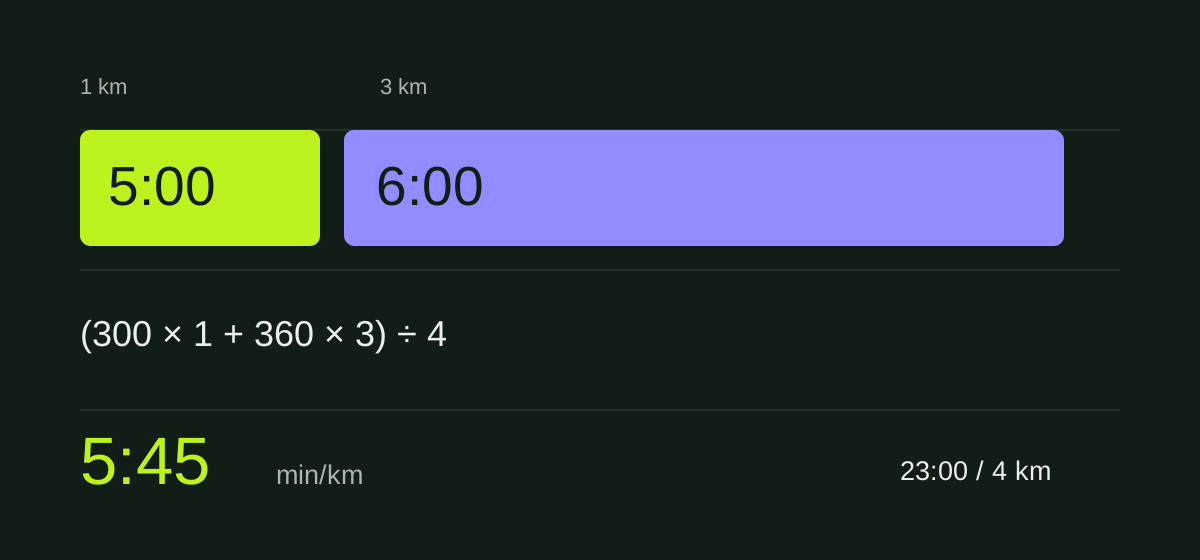
One kilometer is not three kilometers
Imagine running 1 km at 5:00 min/km, followed by 3 km at 6:00 min/km. Averaging the two displayed paces gives 5:30. But the first portion takes 5 minutes and the second takes 18 minutes. The complete run is 23 minutes over 4 km: 5:45 min/km.
The longer portion must count three times as much. This is a distance-weighted mean: multiply each pace in seconds per kilometer by its distance, add the results, then divide by total distance. NIST describes the general weighted-mean principle; this running example applies it to time and distance.
There is a useful check: split the same 4 km into four equal kilometers with paces of 5:00, 6:00, 6:00 and 6:00. Their ordinary mean is 5:45. Equal-distance splits have equal weights; unequal-distance portions do not.
Equal time changes the weights
Now run 5 minutes at each pace. At 5:00 min/km you cover 1 km; at 6:00 min/km you cover 5/6 km. Ten minutes divided by 1⅚ km gives approximately 5:27 min/km. Averaging pace labels still gives 5:30, because equal time does not mean equal distance.
Keep the clock consistent
Total time divided by total distance is the reliable starting point. Decide whether time includes stops, use the same choice throughout, and calculate with unrounded values. Rounding every split first can create a small mismatch in the final result.
Check the arithmetic with the pace calculatorA better way to compare runs
In Runome, use the run detail and comparison views to keep the whole run and its splits in view. A session average answers a different question from a fast repetition. These examples explain standard arithmetic, not the calculation of a Runome score.
Explore run comparison in Runome